Choosing the Right Material
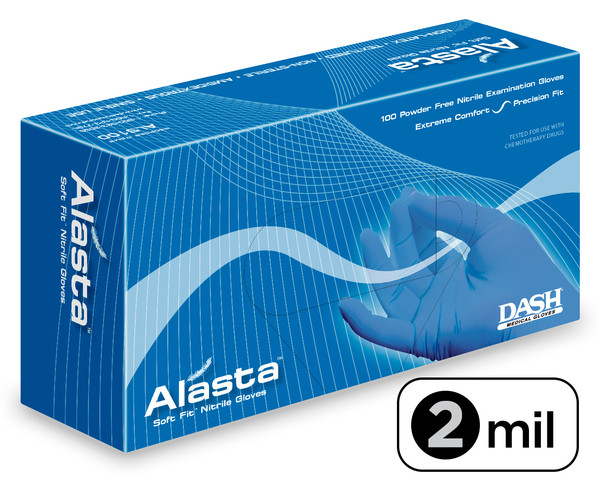
Click on a material below to view details and shop. | ▶ Nitrile Gloves | The premium standard for modern dental care. DASH Nitrile gloves offer exceptional puncture resistance, durability, and a 100% latex-free barrier with true-to-touch tactile sensitivity for delicate procedures.
Shop Nitrile Gloves >> |
| ▶ Polychloroprene Gloves | Blends stretchy comfort, elasticity, and fit of latex, but is entirely latex-free. Perfect for minimizing hand fatigue during long procedures.
Shop Polychloroprene Gloves >> |
| ▶ Latex Gloves | The traditional trusted choice known for unmatched elasticity, comfort, and fit. Excellent for extended wear and intricate procedures.
Shop Latex Gloves >> |
| ▶ Vinyl Gloves | A highly cost-effective, latex-free option. Ideal for short, low-risk examinations, room changeovers, and quick clean-ups, offering a smooth and comfortable fit.
Shop Vinyl Gloves >> |
|
Healthcare Disposable Glove FAQs
How to choose medical examination gloves for healthcare teams
Disposable gloves help protect healthcare workers and the people in their care, but fit, durability and barrier performance can vary by product. These frequently asked questions explain how to compare glove material, thickness, sizing, tactile sensitivity, cuff length, texture and testing for chemotherapy drugs.
The right glove depends on the task, anticipated exposure, required wear time and your organization's infection-control and safety policies. Review the manufacturer's specifications and test data for the exact glove being considered.
▶ 1. Are medical-grade gloves necessary for healthcare workers? Medical examination gloves are the appropriate choice for patient care and for tasks involving potential exposure to blood, body fluids or other potentially infectious materials.
The U.S. Food and Drug Administration regulates non-powdered patient examination gloves as Class I medical devices. FDA requirements include sampling and testing for freedom from holes. FDA uses an acceptable quality level, or AQL, of 2.5 for patient examination gloves. Many DASH medical examination gloves are manufactured to a stricter AQL of 1.5 or lower.
Not every workplace task requires an examination glove. The intended use, workplace hazards and your organization's policies should guide the choice.
Medical Grade and Industrial Grade Gloves
| Feature | Medical Examination Gloves | Industrial Gloves | | Intended use | Patient examination and healthcare tasks | General non-medical tasks | | FDA status | Regulated as medical devices for patient examination | Not cleared or labeled for use as patient examination gloves | | Freedom from holes | Must meet applicable medical-glove requirements; FDA uses AQL 2.5 for patient examination gloves | Quality level varies by product and manufacturer | | Best suited for | Patient care and potential exposure to blood or body fluids | Food handling, routine cleaning and other tasks that do not require a medical examination glove |
|
▶ 2. What glove material is best for healthcare workers? Nitrile is widely preferred for healthcare applications because it combines flexibility, durability, puncture resistance and resistance to many commonly encountered chemicals. It is also free of natural rubber latex.
Vinyl may be suitable for brief, lower-risk tasks with limited exposure. Polychloroprene offers a soft, elastic fit and high tactile sensitivity. Natural rubber latex provides excellent elasticity and touch sensitivity but is not appropriate for anyone with a natural rubber latex allergy.
No material protects against every chemical. When chemical or hazardous-drug exposure is possible, check test data for the specific product and substance.
Disposable Glove Material Comparison
| Material | Latex Free | Key Strengths | Considerations | | Nitrile | Yes | Durability, puncture resistance and versatile performance | Fit, softness and resistance vary by formulation | | Vinyl | Yes | Economical for brief, lower-risk tasks | Looser fit and generally lower durability and barrier performance than nitrile | | Polychloroprene | Yes | Soft, elastic fit with comfort and tactile sensitivity | Often positioned as a premium material | | Natural rubber latex | No | Excellent elasticity, comfort and tactile sensitivity | Not appropriate for users with natural rubber latex allergy | | Cast polyethylene | Yes | Economical for food preparation and very brief tasks | Loose fit; not a medical examination glove and not intended for patient care |
|
▶ 3. Are nitrile gloves better than vinyl gloves? For many healthcare applications, nitrile provides a more secure fit, stronger puncture resistance and better durability during use. Nitrile gloves also typically support longer wear than vinyl, which can reduce glove changes, tears and waste.
Vinyl can still be practical for brief, lower-risk tasks when frequent changes are expected. Select the glove according to the task and anticipated exposure rather than price alone. |
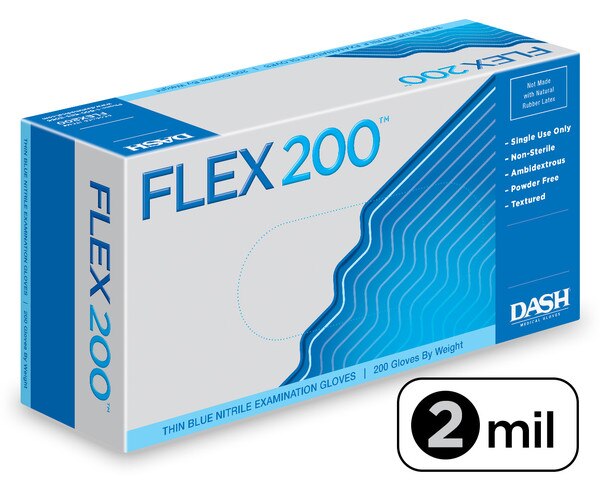
▶ 4. What glove thickness is best for healthcare workers? The best thickness balances durability with the touch sensitivity required for the task. Thin nitrile gloves, commonly around 2 to 3 mil at the palm, are popular for healthcare work that requires precision and frequent glove changes. DASH groups these products under High Tactility Thin Nitrile.
Gloves around 4 mil can provide a versatile balance of comfort and durability. Gloves around 5 mil or thicker may be preferred for more demanding work, longer wear or tasks with a greater likelihood of punctures and tears.
Thickness alone does not determine protection. Material, formulation, fit, manufacturing quality and test results also affect performance. |
▶ 5. How is disposable glove thickness measured? Manufacturers commonly report thickness at the fingertip, palm and cuff. The fingertip is usually the thickest area and the cuff the thinnest because of how the glove material forms on the hand-shaped former during manufacturing. Compare products using measurements taken at the same location.
A mil is one-thousandth of an inch. A 3 mil glove is approximately 0.003 inch thick. Published specifications should identify the measurement point and should be reviewed as typical values rather than assuming the entire glove has one uniform thickness.
How Disposable Gloves Are Measured
| Measurement | Where It Is Measured | Why It Matters | | Length | Fingertip to cuff | Standard examination gloves are generally about 9.5 inches; extended cuffs provide additional wrist and lower-forearm coverage | | Palm width | Across the palm | Used with the manufacturer's sizing chart to help select fit | | Thickness | Fingertip, palm and cuff | The fingertip is generally thickest and the cuff thinnest; compare the same measurement location |
|
▶ 6. How do I choose the right glove size? Glove sizes are not perfectly standardized across brands. Use the manufacturer's sizing chart as a starting point, then sample the glove with the people who will wear it.
A properly fitted examination glove should feel secure without restricting finger movement. Material should reach the web spaces between the fingers, and the cuff should stay in place during normal use. If the glove pulls tightly across the palm, restricts movement or tears during donning, try a larger size. If it wrinkles heavily, slips or reduces grip, try a smaller size.
For organization-wide purchases, include enough sizes for the full team and consider keeping more than one fit profile when hand shapes vary.
[ADD DASH GLOVE SIZING GUIDE HERE] |
▶ 7. Which gloves offer the best tactile sensitivity? High-tactility thin nitrile gloves are a strong choice for tasks that require touch sensitivity, dexterity and precise handling. A close, consistent fit often matters as much as thickness because excess material at the fingertips can reduce control.
For the best evaluation, compare samples while performing representative tasks such as handling instruments, opening packages, operating equipment or palpating. Do not choose a thinner glove when the task requires greater durability or chemical resistance. |
▶ 8. Do healthcare gloves need texture? Texture can influence grip and the wearer's sense of control, but more texture is not automatically better for every task. Fingertip texture is the most popular option for healthcare examination gloves because it places texture where users commonly handle instruments and equipment while allowing the rest of the glove to remain smooth and flexible.
Fully textured or more pronounced textures may be preferred when added grip is important. Evaluate texture with the actual tools, liquids and tasks used in the workplace. |
▶ 9. When should healthcare workers use an extended-cuff glove? A standard examination glove is generally about 9.5 inches long. An extended-cuff glove provides additional coverage at the wrist and lower forearm and may be preferred for higher-risk tasks, situations with splash potential or when the glove must overlap protective clothing.
Cuff length does not replace other required personal protective equipment. Select glove length as part of the employer's hazard assessment and make sure the glove works with gowns or other protective clothing used for the task. |
▶ 10. Why are healthcare examination gloves powder-free? Powder was once used to make gloves easier to put on. The FDA banned powdered patient examination gloves and powdered surgeon's gloves because glove powder presented an unreasonable and substantial risk of illness or injury.
Healthcare examination gloves sold in the United States should be powder-free. For easier donning, consider powder-free technologies such as DASH Glide Assist™, which uses a water-based inner treatment designed to help gloves slide onto damp hands more easily. Learn more about Glide Assist™ technology. |
▶ 11. What should healthcare workers with sensitive skin look for? Frequent handwashing, sanitizer use and glove wear can contribute to dry or irritated skin. Glove-related reactions may involve natural rubber latex proteins, chemical additives or irritant contact dermatitis, so the cause matters.
A nitrile glove with an FDA-cleared Low Dermatitis Potential claim may be helpful for people concerned about allergic contact dermatitis caused by certain chemicals used in glove manufacturing. Low Dermatitis Potential and accelerator-free are not identical claims. Buyers should review the manufacturer's documentation to understand which accelerators are absent and what testing supports each claim.
DASH also offers Alasta® Aloe, which contains organic aloe vera for users who prefer an aloe-infused glove. No glove can guarantee that a reaction will not occur. Anyone with persistent or severe symptoms should seek guidance from an appropriate healthcare professional.
Low Dermatitis Potential glove options:
• Alasta® with Aloe Nitrile Exam Gloves
• Black Maxx® Extreme Nitrile Gloves |
▶ 12. How do I know whether a glove provides the right protection? Begin with the task and the hazards the wearer may encounter. Consider blood and body fluids, cleaning chemicals, laboratory substances, hazardous drugs and the likelihood of punctures, tears or splashes.
Review the specifications and test results for the exact glove. Material, color and thickness do not by themselves establish protection against a particular chemical or hazardous drug. OSHA requires employers to select hand protection according to the hazards and conditions identified in the workplace.
Use the Find the Right Glove by Performance Needs chart below, or try the DASH Glove Finder Tool.
[ADD PERFORMANCE NEEDS CHART HERE] |
▶ 13. What do chemotherapy drug tested and chemo rated mean? The phrase chemo rated is commonly used for a medical examination glove that has been tested for permeation by specific chemotherapy drugs. ASTM D6978 is the test method commonly used to evaluate resistance of medical gloves to permeation by chemotherapy drugs.
A chemotherapy-drug claim does not mean the glove protects against every hazardous drug for an unlimited time. Test results are drug-specific and include permeation or breakthrough information. Before use, confirm that the exact glove was tested against the drug being handled and review the manufacturer's results, limitations and recommended change interval.
Gloves are one part of a hazardous-drug safety program. NIOSH guidance may call for two pairs of chemotherapy gloves for certain activities, along with gowns, eye or face protection and other controls. Follow the facility's risk assessment, policies and applicable standards for preparation, administration, cleanup, waste handling and contact with patient excreta. Browse DASH gloves tested for use with chemotherapy drugs. |
▶ 14. Are nitrile gloves latex-free? Yes. Nitrile is a synthetic rubber and does not contain natural rubber latex. Nitrile is widely used when workers or patients are concerned about natural rubber latex allergy.
Latex-free does not mean free of every potential allergen or irritant. Review product specifications if a user has a known sensitivity to glove-manufacturing chemicals. |
| Choose Quality and Consistency | The lowest-priced glove is not always the lowest-cost glove. A product that tears, fits inconsistently or cannot withstand the intended task may lead to more glove changes, wasted product and employee frustration.
A dependable disposable-glove program should provide: | Protection Suited to the Task
Protection suited to the task and identified hazards | Consistent Quality & Fit
Consistent quality, sizing and fit from case to case | Comfort for Extended Wear
Comfortable options for frequent or extended wear | Reliable Availability
Reliable product availability | Clear Product Information
Clear specifications and supporting test information | Samples & Expert Guidance
Samples and guidance from a knowledgeable supplier |
|
Helpful DASH Resources
• DASH Glove Finder: Compare performance levels, materials, thicknesses and recommended applications.
• Chemotherapy Drug Tested Gloves: Browse DASH examination gloves tested for use with chemotherapy drugs.
• Alasta® PRO with Glide Assist™: Learn about easy-donning Glide Assist technology and request a sample.
• Skin-Friendly and Low Dermatitis Potential Gloves: Compare options designed for users concerned about dry, irritated or sensitive skin. See Alasta® Aloe and Black Maxx® Extreme .
Sources and Further Guidance
• FDA Medical Gloves
• 21 CFR 880.6250 Non-powdered patient examination glove
• FDA medical-glove defect guidance and AQL information
• FDA ban on powdered medical gloves
• OSHA Hand Protection Standard 29 CFR 1910.138
• NIOSH Hazardous Drug Exposures in Healthcare
This resource provides general product-selection information. Employers should complete a workplace hazard assessment and follow applicable regulations, standards and facility policies.
DASH Medical Gloves | dashmedical.com | 800-523-2055 |
|