Choosing the Right Material
Click on a material below to view details and shop. | ▶ Nitrile Gloves | The premium standard for modern dental care. DASH Nitrile gloves offer exceptional puncture resistance, durability, and a 100% latex-free barrier with true-to-touch tactile sensitivity for delicate procedures.
Shop Nitrile Gloves >> |
| ▶ Polychloroprene Gloves | Blends stretchy comfort, elasticity, and fit of latex, but is entirely latex-free. Perfect for minimizing hand fatigue during long procedures.
Shop Chloroprene Gloves >> |
| ▶ Latex Gloves | The traditional trusted choice known for unmatched elasticity, comfort, and fit. Excellent for extended wear and intricate procedures (ideal for non-latex sensitive patients and staff).
Shop Latex Gloves >> |
| ▶ Vinyl Gloves | A highly cost-effective, latex-free option. Ideal for short, low-risk examinations, room changeovers, and quick clean-ups, offering a smooth and comfortable fit.
Shop Vinyl Gloves >> |
|
Frequently Asked Questions
Click on a question below to reveal the answer. | ▶ What types of medical exam gloves does DASH® offer? DASH® Medical Gloves offers nitrile, vinyl, polyethylene, latex, and chloroprene exam gloves for dental and operational environments.
The DASH® exam glove portfolio includes:
• Nitrile gloves
• Vinyl gloves
• Polyethylene gloves
• Latex gloves
• Chloroprene (polychloroprene) gloves
Each glove material supports different levels of:
• barrier protection,
• tactile sensitivity,
• improved chemical resistance,
• durability,
• and cost efficiency.
Nitrile and chloroprene gloves are commonly preferred in dental and clinical environments due to their durability and latex-free protection. |
▶ What sizes are available for DASH® exam gloves? DASH® Medical exam gloves are available in XS, S, M, L, XL, and XXL sizes.
Proper glove sizing improves:
• tactile sensitivity,
• dexterity,
• clinician comfort,
• and procedural safety.
A correctly fitted medical glove also reduces hand fatigue during extended wear. |
▶ What is the most popular DASH® exam glove? VitalGard® Nitrile Exam Gloves are the most widely used DASH® exam gloves in dental and clinical settings.
VitalGard® Nitrile gloves are commonly selected because they provide:
• latex-free protection,
• extended-wear comfort,
• and high tactile performance.
Nitrile gloves are frequently preferred in dental practices because they help reduce latex allergy concerns while maintaining barrier protection. |
▶ What is the difference between latex and nitrile gloves? Latex gloves are made from natural rubber latex, while nitrile gloves are synthetic and latex-free.
Latex Gloves
Latex exam gloves provide:
• high elasticity,
• strong tactile sensitivity,
• and comfortable fit.
However, latex gloves may trigger allergic reactions in some clinicians or patients.
Nitrile Gloves
Nitrile exam gloves provide:
• latex-free protection,
• improved chemical resistance,
• and strong durability.
Nitrile gloves are commonly preferred in dental and medical environments because they support allergy-sensitive protocols and workplace safety initiatives. |
▶ Why are dental offices switching to non-latex gloves? Many dental offices have transitioned to nitrile or other non-latex gloves to reduce latex allergy risks for clinicians and patients.
Benefits of non-latex glove environments include:
• reduced allergen exposure,
• improved workplace safety,
• support for allergy-sensitive patients,
• and simplified compliance protocols.
Nitrile gloves have become the most common latex-free alternative in modern dental practices. |
▶ Did OSHA ban latex gloves in dental offices? No. OSHA has not banned latex gloves in dental offices or healthcare facilities in the United States.
Non-powdered latex gloves remain legal for medical and dental use.
Under OSHA’s Bloodborne Pathogens Standard, employers must:
• provide appropriate PPE,
• maintain a safe workplace,
• minimize exposure to known hazards,
• and address workplace allergy concerns.
OSHA does not require a specific glove material such as latex, nitrile, or vinyl. |
▶ Which states have latex-related healthcare regulations? States commonly cited for latex-related healthcare restrictions or protections include:
Rhode Island, Illinois, California, Connecticut, Hawaii, Ohio, Oregon, and Arizona.
Most of these regulations focus on:
• reducing latex allergy exposure,
• protecting healthcare workers,
• requiring non-latex options in certain settings,
• or encouraging latex-safe environments.
They are generally not full bans on non-powdered latex gloves. For more information please visit OSHA. |
▶ When should exam gloves be changed during patient care? Medical exam gloves should be changed between every patient interaction and immediately when compromised.
Exam gloves should also be replaced:
• after tears or punctures,
• after contamination,
• during extended wear,
• or during high-stress procedures.
Frequent glove changes are essential for infection control and cross-contamination prevention in dental and medical environments. |
| | ▶ What is double gloving? Double gloving means wearing two layers of medical gloves to improve barrier protection during high-risk procedures.
The outer glove functions as the primary barrier. If compromised, the inner glove maintains additional protection.
Double gloving is commonly recommended for:
• high-fluid exposure environments,
• and procedures involving sharps or needlestick risks. |
▶ How can dental practices reduce exam glove costs? Dental practices can reduce exam glove costs by standardizing glove selection and matching glove material to procedural risk.
Cost optimization strategies include:
• using vinyl gloves for low-risk tasks or low tactility,
• reserving nitrile or chloroprene gloves for higher-risk procedures,
• reducing unnecessary SKU complexity,
• and purchasing gloves through annual or bulk procurement programs.
This approach improves inventory consistency while maintaining infection control standards. |
▶ What is AQL for medical exam gloves? AQL stands for Acceptable Quality Level, which measures the maximum allowable defect rate in a glove batch using statistical sampling methods.
For medical exam gloves:
• lower AQL values indicate higher quality,
• fewer pinhole defects,
• and more reliable barrier protection.
Industry-standard exam gloves are commonly tested to AQL 4.0 or better. |
▶ Are nitrile gloves better for dental practices? Nitrile gloves are commonly preferred in dental practices because they combine latex-free protection with strong durability and improved chemical resistance.
Benefits of nitrile exam gloves include:
• reduced allergy concerns,
• puncture resistance,
• compatibility with modern infection-control protocols,
• and strong tactile performance.
Many dental offices have standardized to nitrile gloves as their primary exam glove platform. |
▶ Does DASH® contribute to non-profit organizations? Yes. DASH® offers exam gloves that contribute to charitable and environmental causes with every case sold of the following products:
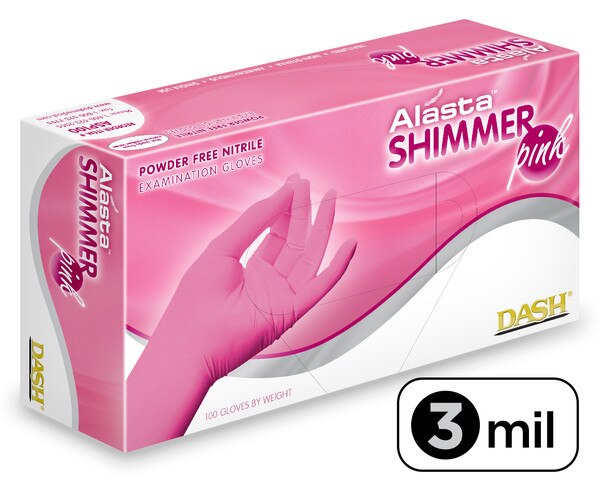
• Alasta® Shimmer Pink® Exam Gloves: DASH® donates $1 per case to the American Cancer Society to support cancer research and patient programs.
• True Comfort® blu Exam Gloves: A portion of sales supports organizations focused on ocean cleanup and environmental sustainability.
These programs allow dental practices to align routine glove purchasing with broader social and environmental impact initiatives. |
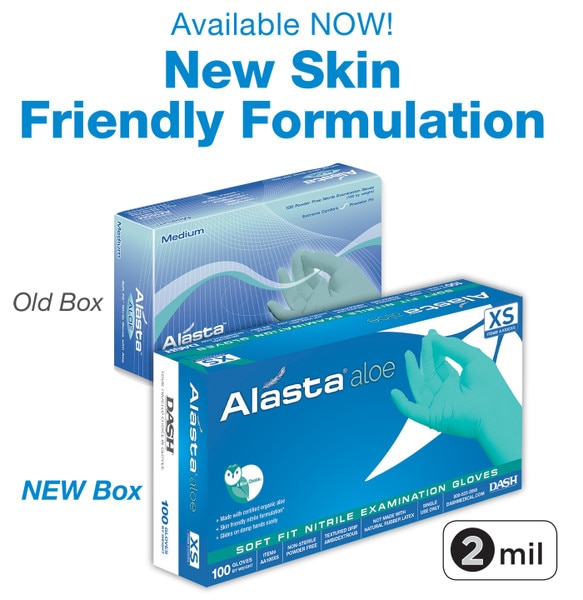
▶ What exam gloves are best for dry or sensitive skin? Alasta® Aloe Exam Gloves are specific to supporting skin health, making them a strong option for clinicians or staff experiencing:
• dryness,
• flaking,
• or irritation from frequent glove use.
Other considerations include:
• choosing latex-free materials to reduce allergy risk,
• selecting gloves with softer formulations for comfort,
• and maintaining proper hand care between patient interactions. |
▶ What if I have consistent dermal reactions to exam gloves? If dryness or irritation persists, cotton glove liners can be worn underneath exam gloves.
Cotton liners:
• absorb moisture,
• reduce friction between skin and glove material,
• and create a protective barrier for sensitive skin users.
Without compromising protection when properly fitted. |
▶ What is Glide Assist™ and how does it help in dental procedures? Glide Assist™ is a glove feature or coating designed to make donning and doffing exam gloves easier, especially during extended or high-frequency glove changes.
Glide Assist™ technology improves:
• ease of hand entry,
• reduced friction during donning,
• and smoother glove removal.
This is particularly valuable in dental environments where clinicians:
• change gloves frequently,
• work in fast-paced operatories,
• and need consistent glove performance between patients. |
|
|